Inventory & Asset Tracking Systems
Track inventory, tools, equipment, and assets in real-time from a centralized custom system.
Capabilities
Assets And Inventory Commonly Tracked
Inventory and asset tracking systems can be customized around the equipment, stock, materials, and operational resources that drive your business.
From Spreadsheet Tracking To Real-Time Asset Visibility
Before Asset Tracking
- • Inventory tracked in spreadsheets
- • Equipment locations are unclear
- • Stock counts become outdated
- • Tools are frequently misplaced
- • Manual inventory audits required
- • Reorders happen reactively
- • Asset ownership is unclear
- • Operational delays occur
After Asset Tracking
- • Inventory updates automatically
- • Asset locations are visible
- • Stock levels are tracked live
- • Assignments are documented
- • Maintenance history is available
- • Low-stock alerts are triggered
- • Usage activity is recorded
- • Operations stay organized
How Inventory & Asset Tracking Systems Works
Register
Inventory items, equipment, tools, vehicles, and assets are entered into a centralized tracking system with unique identifiers.
Assign
Assets are assigned to employees, vehicles, job sites, departments, warehouses, or storage locations.
Track
Movements, usage, maintenance activity, inventory counts, and transfers are recorded as operations occur.
Monitor
Managers receive visibility into inventory levels, asset status, maintenance schedules, utilization, and reorder requirements.
Tracking Flow
Inventory & Asset Tracking Pipeline
Visual Tour
What The System Looks Like
Inventory Dashboard
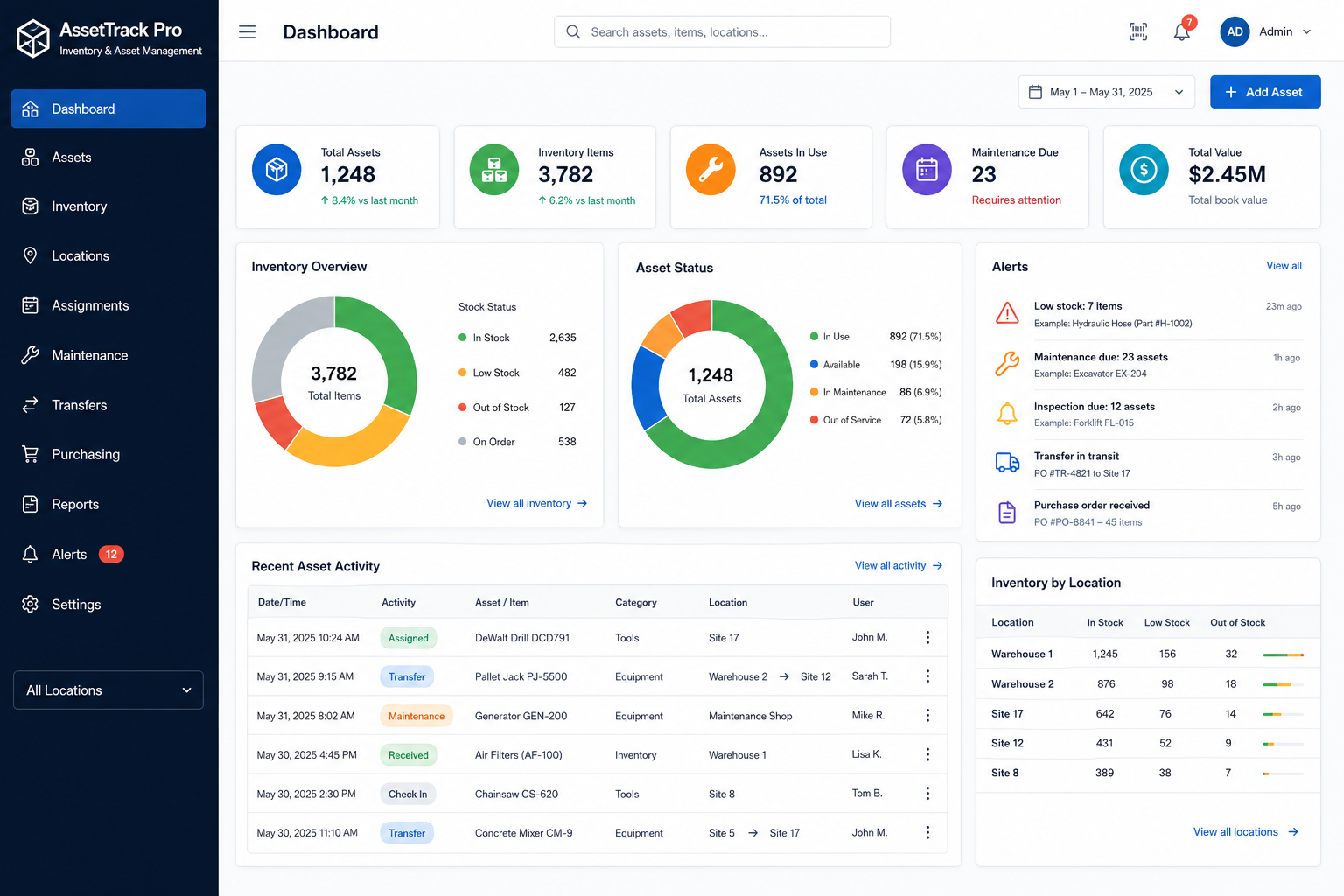
View inventory levels, stock movement, asset assignments, and operational activity from a centralized dashboard.
Asset Tracking Workspace
Monitor equipment locations, assignment history, maintenance records, and inventory transactions.
Operational Visibility
Track stock availability, maintenance schedules, asset utilization, and reorder requirements in real time.
Asset Management Solutions
Common Inventory & Asset Tracking Systems
Tool Tracking Systems
Track tool assignments, locations, usage history, and accountability across employees and job sites.
Warehouse Inventory Management
Monitor stock levels, receiving activity, transfers, consumption, and reorder thresholds.
Fleet Asset Tracking
Track vehicles, equipment, maintenance schedules, inspections, and assignment history.
Construction Equipment Management
Manage heavy equipment locations, utilization rates, maintenance records, and operator assignments.
Parts & Materials Tracking
Track inventory consumption, material availability, and purchasing requirements across operations.
Asset Assignment Systems
Maintain accountability by tracking which employee, department, or location is responsible for each asset.
Impact
Typical Operational Improvements
Better Asset Visibility
Know where inventory, tools, and equipment are located at any given time.
Reduced Losses
Improve accountability and reduce misplaced, missing, or untracked assets.
Accurate Inventory Counts
Maintain reliable stock information without relying on outdated spreadsheets.
Faster Audits
Simplify inventory reviews and asset verification with centralized records.
Improved Maintenance Tracking
Monitor inspections, repairs, service intervals, and equipment history.
Smarter Purchasing Decisions
Use inventory data and consumption trends to avoid shortages and overstocking.
Compatibility
Connected To Existing Operations
Inventory and asset tracking systems are most effective when connected to the operational tools already used throughout the business.
Inventory activity, purchasing, maintenance, accounting, field operations, and reporting can all be synchronized through a centralized platform.
The result is better visibility, fewer manual processes, and more reliable operational data.
FAQ
Frequently Asked Questions
Q: Can the system track both inventory and equipment?
Q: Can assets be assigned to employees or job sites?
Q: Can the system generate low-stock alerts?
Q: Can maintenance schedules be tracked?
Q: Can it integrate with purchasing or accounting software?
Related Services
Connected Infrastructure
Still Managing Inventory With Spreadsheets?
When inventory, tools, and equipment are difficult to track, businesses waste time searching, over-purchasing, and reacting to avoidable shortages. Centralized visibility changes that.